
Revisiting Groundhog Day

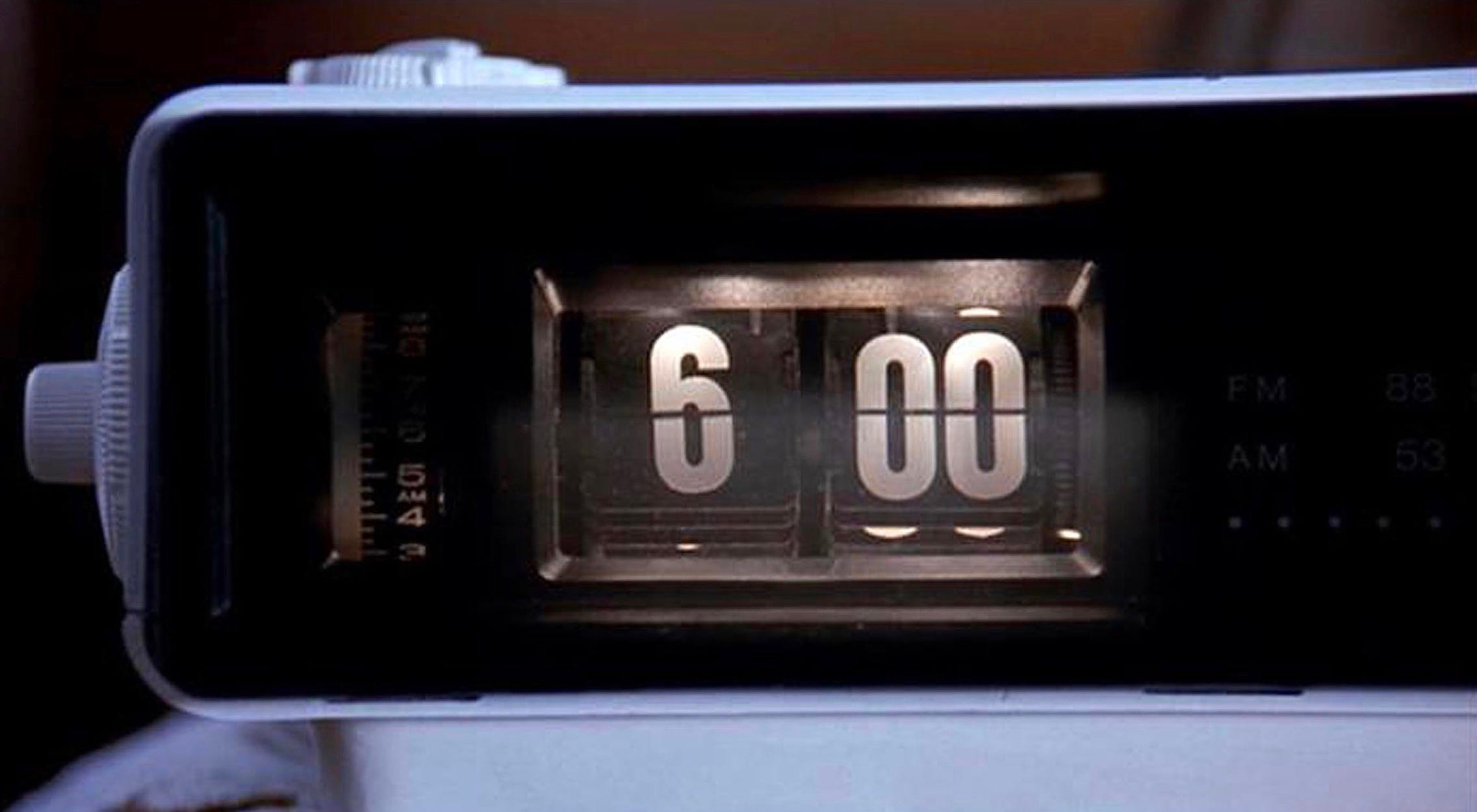
This essay was originally published on Groundhog Day in 2022. I have lightly revised it for rerelease. The central argument remains the same, but my thinking about freedom, moral formation, and the role of ordinary life has continued to develop, and this republished version reflects that.
Few films reward repeated viewing quite like Groundhog Day. What begins as a high-concept comedy gradually reveals itself as a meditation on time, agency, and the conditions under which a human life can go well. That is no accident. The film is not merely about being trapped in a temporal loop; it is about being trapped in a way of being — and about what it would take to escape it.
The familiar setup is simple enough. Phil Connors, a cynical and self-absorbed weatherman, finds himself reliving the same day over and over again in the small town of Punxsutawney. At first, the situation appears to grant him a kind of absolute freedom. His actions appear to have no lasting consequences — no punishment sticks, and no mistake carries forward. Phil is liberated from constraint in the most literal possible sense.
And yet this initial “freedom” quickly reveals itself as empty — and then finally unbearable.
What Groundhog Day helps us see, quietly and non-didactically, is that there are at least two very different conceptions of human freedom, and that confusing them can easily lead to misery.
Freedom as the Absence of Constraints
On the first conception, freedom is understood primarily as the absence of external constraints. On this view, Io be free is to be unbound: not subject to rules, expectations, or consequences one has not chosen. This is the conception that Phil initially finds thrilling. He can indulge every appetite, manipulate every situation, and treat other people as mere instruments for his own amusement. Nothing can really touch him.
But this vision of freedom has a built-in problem. Once constraints are removed, nothing remains to direct Phil’s agency apart from his own desires. Pleasures become repetitive, shallow, and exhausting. Phil’s descent into boredom, despair, and eventually suicide attempts is not a bug in the system; it is the system functioning exactly as one should expect.
Freedom understood merely as license — freedom from — cannot tell us what to do with ourselves once the leash is gone.
Freedom as Self-Mastery
The second conception of freedom emerges only gradually, and it does not announce itself with fanfare. It appears instead in discipline, patience, attention, and genuine care. Phil begins to learn the piano — not initially to impress, but simply because the time is there. He develops skills. He notices details. He becomes reliable. He helps others, often anonymously, often with no prospect of recognition or reward.
Here freedom looks very different. It is not the ability to do whatever one wants, but the ability to become a certain kind of person. It is freedom for something: for excellence, for care, for genuine participation in the lives of others.
Crucially, this form of freedom does not arise through a single dramatic choice. It is forged through repetition — through doing the same small things well, again and again, even when novelty has disappeared.
The Moral Significance of Repetition
It is tempting to read Groundhog Day as a story of self-improvement. But that framing misses something important. Phil does not escape the time loop because he has checked every virtue box or achieved a flawless moral scorecard. He escapes it because he has learned how to inhabit a life: to attend to others as ends-in-themselves, to take joy in practices that are valuable in their own right, and to value the present moment.
What finally breaks the loop is not mastery over the world, but reconciliation with it.
This is why the film resonates so strongly with ordinary human experience. Most of our lives are not composed of dramatic turning points or heroic acts. They consist instead in repetition: returning to the same places, encountering the same people, performing the same tasks. If freedom requires constant novelty or limitless choice, then most human lives will fall short. But if freedom consists in learning how to live well within repetition — how to love, attend, and take responsibility — then the ordinary becomes the primary arena of moral significance.
Freedom, Love, and the Ordinary
One of the film’s quiet achievements is its refusal to treat love as a prize to be won through cleverness or control. Phil initially tries to engineer Rita’s affection by exploiting his informational advantage, and these attempts invariably fail. Love, the film suggests, cannot be forced or hacked; it emerges only when the self loosens its grip and becomes genuinely receptive.
Seen this way, Phil’s transformation is not merely ethical but relational. He learns not just how to act better, but how to be with others differently. Freedom, in its richest sense, turns out to be inseparable from dependence, vulnerability, and mutual recognition.
A Final Thought
Groundhog Day does not offer a theory so much as a vision. It invites us to reconsider what we mean when we say that we want to be free. If freedom means exemption from limits, then the human condition itself is a kind of prison. But if freedom means the patient cultivation of attention, care, and self-command within those limits, then even a life marked by repetition can be a good one.
The unsettling suggestion of the film is that many of us are already living in our own loops — not because time itself is stuck, but because we have not yet learned how to inhabit it. And the hopeful suggestion is that escape does not require a miracle. It requires learning, slowly and imperfectly, how to live.